
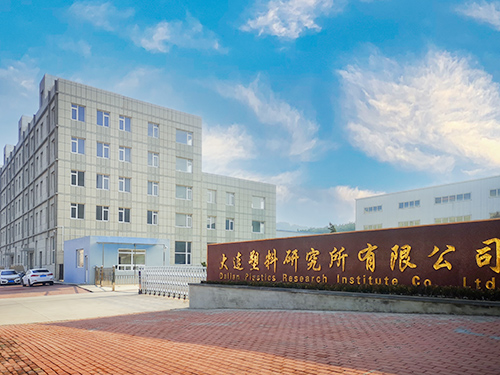
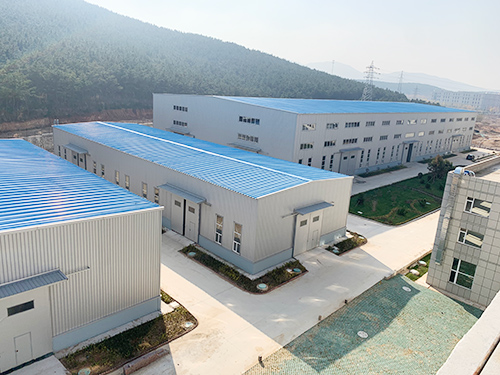
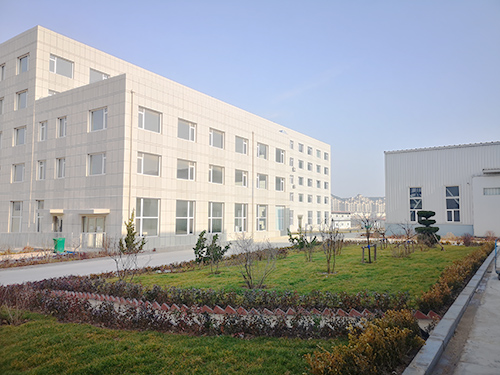




Company name: Dalian Plastics Research Institute Co., Ltd
Telephone:+86-411-66177850
18841186255
Fax:+86-411-86601784
Address: No.18 Fenghenan Road,Lvshunkou District,Dalian,Liaoning
Company name: Dalian Plastics Research Institute Co., Ltd
Telephone:+86-411-66177850
18841186255
Fax:+86-411-86601784
Address: No.18 Fenghenan Road,Lvshunkou District,Dalian,Liaoning
Selecting reliable honeycomb panel production line equipment is critical to product quality, production efficiency and long-term profitability. Amid surging demand for honeycomb panels in construction materials, rail transit, new energy and other sectors, enterprises should conduct rational screening to avert risks arising from improper equipment selection. Key purchasing guidelines sorted from four dimensions are provided for reference.
First, clarify corporate positioning and core requirements as the precondition for selection. Many enterprises follow trends blindly without considering actual conditions, resulting in overcapacity or insufficient equipment performance. Three priorities need sorting out. First, product positioning: small honeycomb panels for household ceilings, or large high-strength panels for building curtain walls and carriage interiors? The former demands flexibility while the latter requires high precision and stability. Second, capacity requirements: hundreds or thousands of square meters of daily output. Semi-automatic lines suit small workshops, whereas large-scale production calls for fully automatic high-output assembly lines. Third, material categories. Production lines differ greatly for aluminum, stainless steel and composite honeycomb panels. Aluminum honeycomb requires anti-oxidation treatment, and stainless steel needs anti-corrosion configurations. Clear basic parameters prevent mismatch between equipment and demands.
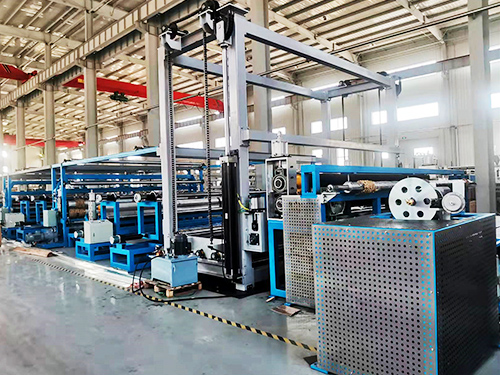
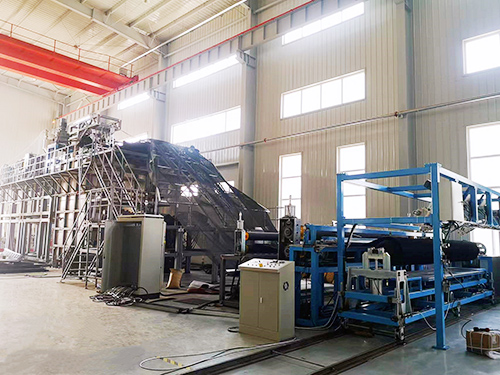
Second, focus on core components and assess suppliers’ technical competence. Line performance hinges on three key systems. The honeycomb core processing system: uniform core stretching directly affects panel strength; uneven stretching leads to insufficient local load capacity. The panel lamination system: consistent adhesive coating and precise hot-pressing control prevent delamination and bulging, common defects in honeycomb panels made by inferior manufacturers. The numerical control system: intelligent control reduces human errors and raises yield rates. Also evaluate manufacturers’ R&D capacity, such as optimized solutions tackling industry pain points including edge glue leakage and uneven core density. Suppliers with independent patents and mature craftsmanship deliver stable equipment.
Third, verify supplier qualifications and full-cycle services to avoid after-sales pitfalls. Trustworthy suppliers shall hold industrial certifications such as ISO standards and construction machinery manufacturing permits, and boast proven project cases in relevant fields. On-site inspection is recommended. Check equipment operation, core stretching and lamination precision at suppliers’ workshops. Visit end users adopting such equipment to learn about failure frequency and actual yield rates. Confirm three core service terms: free on-site installation and commissioning, training duration for operators and maintenance staff, and response time for major breakdowns (e.g., 24-hour on-site service). Many small manufacturers lack reliable after-sales support; prolonged shutdown losses far outweigh equipment price gaps, which requires thorough verification.
Fourth, evaluate cost performance rationally and guard against hidden costs. Low-priced equipment seems economical yet carries hidden drawbacks: generic motors instead of branded ones causing high energy consumption and frequent breakdowns; simple steel frames prone to deformation under long-term operation; shoddy core components pushing reject rates above 20%. Calculate total costs covering equipment procurement, subsequent energy consumption, consumables, maintenance, and revenue gaps caused by varying yield rates. For instance, a fully automatic line costing an extra 120,000 may lift yield rates by 15%, generating nearly 20,000 more square meters of qualified panels monthly and recouping the price gap within half a year.
In summary, purchasing honeycomb panel production lines is a long-term investment. Based on actual demands, enterprises should balance technology, service and costs. Avoid inferior equipment for low upfront costs. Partner with capable, service-oriented suppliers to build stable, efficient production capacity and sustain market competitiveness.




Address: No.18 Fenghenan Road,Lvshunkou District,Dalian,Liaoning Telephone:18841186255 mailbox:dsy@plasticdl.com

 Taobao Wangwang