
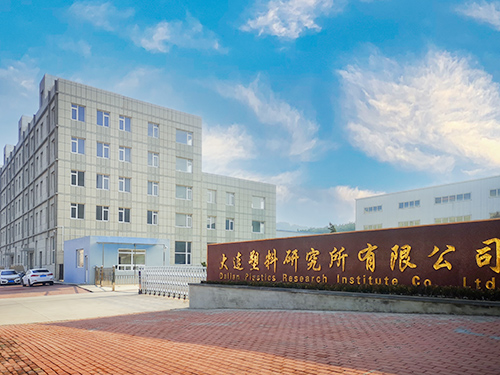
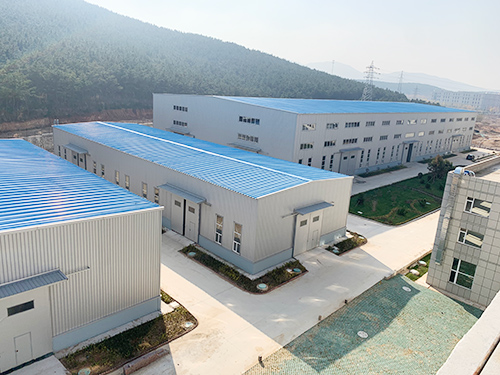
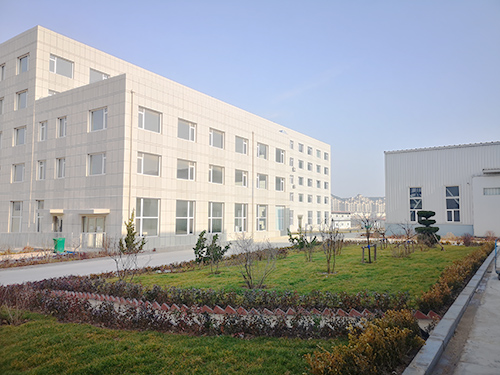




Company name: Dalian Plastics Research Institute Co., Ltd
Telephone:+86-411-66177850
18841186255
Fax:+86-411-86601784
Address: No.18 Fenghenan Road,Lvshunkou District,Dalian,Liaoning

Company name: Dalian Plastics Research Institute Co., Ltd
Telephone:+86-411-66177850
18841186255
Fax:+86-411-86601784
Address: No.18 Fenghenan Road,Lvshunkou District,Dalian,Liaoning
Troubleshooting Methods for Geogrid Production Line Equipment
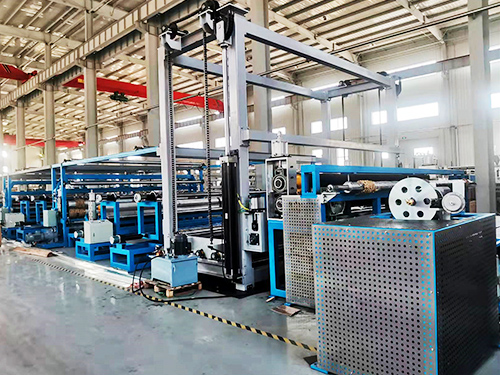
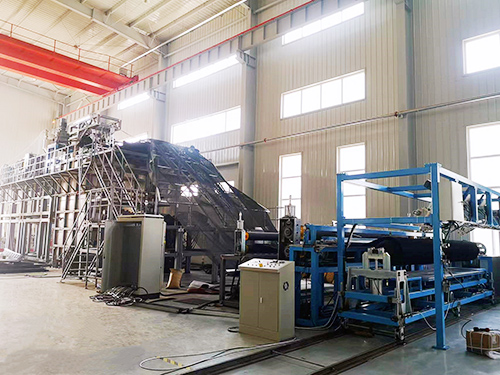
Geogrids are key reinforcement and protection materials in geotechnical engineering. Their production relies on continuously stable production line equipment, and troubleshooting efficiency directly affects output, product qualification rate and production costs. A geogrid production line consists of four core processes: raw material feeding, extrusion plasticization, stretching shaping and winding. Troubleshooting shall follow the principles of "simple first then complex, exterior first then interior, electrical first then mechanical, common faults first then individual faults". Faults shall be located by process layers to enable rapid rectification and stable line operation.
Implementation of General Troubleshooting Principles
Prioritize visible external faults (e.g., bridging in hoppers, loose wiring) before disassembling internal parts. Check easily identifiable issues such as electrical alarms and abnormal sensors first, then trace deep-rooted causes including mechanical wear and material aging. For common faults like pressure fluctuation and over-temperature, inspect general factors such as clogged filter screens and damaged heating rings before addressing exclusive issues including worn screws and frequency converter drift to avoid blind disassembly.
Troubleshooting for Core Processes, Matching Fault Symptoms Precisely
1. Raw Material Feeding
Typical faults: unstable material flow, inconsistent melt color.
Check hopper bridging caused by agglomerated raw materials; clear manually or adjust hopper heating temperature (50–70℃) to break lumps.
Verify raw material formula (PP/PE ratio and regrind proportion shall comply with process standards) to eliminate impurity contamination.
Calibrate feeder motor speed. If speed fluctuation exceeds ±2%, adjust frequency converter parameters for steady flow.
2. Extrusion Plasticization
Typical faults: poor plasticization with crystal spots, excessive die head pressure.
Calibrate barrel zone temperatures (Zone 1: 170–190℃, Zone 2: 190–210℃, die head: 200–220℃). Replace thermocouples if temperature deviation exceeds 5℃.
Inspect filter screens. Replace immediately if pressure differential between inlet and outlet exceeds 0.5 MPa due to blockage.
Measure screw-barrel clearance (standard ≤0.3 mm). Excessive wear causes uneven plasticization; repair screw via surfacing or replace the whole unit.
3. Stretching Shaping
Stretching determines geogrid performance. Common faults: uneven stretching, insufficient tensile strength, unqualified elongation.
Verify longitudinal/transverse draw ratio (normally 3–8 times). Synchronize stretcher speeds to keep tension difference between two sides ≤5%.
Check preheating zone temperature; preheat geogrids to 80–100℃ before transverse stretching to prevent breakage from low temperature.
Control shaping mold temperature at 90–120℃ to avoid shrinkage and deformation from inadequate shaping.
4. Auxiliary System Faults
Electrical faults mostly include PLC alarms and servo out-of-step; cooling faults mainly involve abnormal roller temperature.
Retrieve alarm codes and locate faulty pressure/displacement sensors per operation manuals.
Tighten loose terminals and retest signal stability.
Clean scaled pipelines or replace cooling pumps to resolve cooling system blockages.
Fault Logging and Predictive Maintenance to Cut Breakdowns
Establish a fault log recording causes and solutions of each malfunction. Analyze frequent faults (e.g., clogged screens, temperature anomalies) monthly to formulate maintenance schedules.
Daily pre-shift inspection: heating ring integrity, sensor readings.
Weekly maintenance: replace extrusion filter screens, clean hoppers.
Quarterly inspection: measure screw clearance, calibrate stretching parameters.
Predictive troubleshooting eliminates potential faults in advance, cutting downtime by over 30% and lifting product qualification rate above 98%.




Address: No.18 Fenghenan Road,Lvshunkou District,Dalian,Liaoning Telephone:18841186255 mailbox:dsy@plasticdl.com

 Taobao Wangwang