
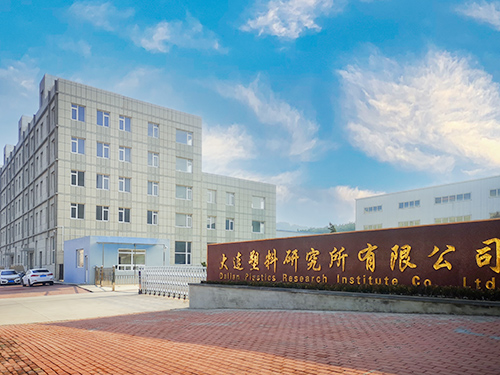




Company name: Dalian Plastics Research Institute Co., Ltd
Telephone:+86-411-66177850
18841186255
Fax:+86-411-86601784
Address: No.18 Fenghenan Road,Lvshunkou District,Dalian,Liaoning

Company name: Dalian Plastics Research Institute Co., Ltd
Telephone:+86-411-66177850
18841186255
Fax:+86-411-86601784
Address: No.18 Fenghenan Road,Lvshunkou District,Dalian,Liaoning
The installation and commissioning of a geogrid production line is the critical link that transforms equipment from hardware into productive capacity. It directly determines stable operation, qualified product quality and controllable commissioning cycle. For enterprises, selecting a manufacturer with strong installation and commissioning capability is the core premise to avoid hidden production risks and guarantee investment returns. This paper analyzes six key dimensions to evaluate manufacturers’ capability in this regard.
Installation and commissioning rely heavily on practical experience rather than theoretical knowledge. Enterprises may assess from three aspects:
Quantity and scale of cases: Prioritize manufacturers with experience in over 10 geogrid production line projects, especially large-scale lines with an annual output above 10 million square meters. Larger projects demand higher installation precision, process coordination and technical integration, reflecting comprehensive strength.
Industry coverage and customer reputation: Check whether the manufacturer has served various geogrid types including plastic, fiberglass and steel-plastic composite geogrids, and verify customer feedback. Request customer contact information to inquire about problem-solving efficiency and post-commissioning operational stability.
Site availability for inspection: Professional manufacturers actively invite clients to visit operational sites to observe actual equipment performance, production efficiency and product quality. Refusal of site visits may indicate insufficient experience or underlying risks.
Installation and commissioning quality depends entirely on the technical team’s professionalism:
Staff qualification and structure: The team shall include mechanical, electrical and automation control engineers with valid professional certifications such as registered mechanical engineer certificates, electrician licenses and PLC programming credentials. Senior technicians with over five years of industry experience shall lead the team to handle complex on-site issues.
Skill updating and training: Geogrid equipment technology evolves rapidly with intelligent control and energy-saving processes widely applied. Manufacturers shall arrange regular training, cooperate with universities and industry associations, or maintain internal R&D departments to keep technical capabilities updated.
Team scale and response speed: Large production lines require multi-disciplinary collaboration. Manufacturers shall maintain a full-time installation and commissioning team of over 10 professionals to avoid schedule delays. A 24-hour on-site emergency response capability is essential.
Standardized workflows prevent errors and ensure progress:
Preparatory stage: Conduct site survey covering layout dimensions, water and power distribution and load-bearing capacity, then formulate detailed installation plans including schedules, manpower arrangement and safety measures. Clear precision standards such as horizontal deviation ≤ 0.1mm/m and electrical wiring specifications shall be defined.
On-site installation stage: Strictly implement the formulated plan with quality acceptance after each procedure including frame assembly, motor mounting and conveyor debugging. For geogrid lines, precise coaxiality adjustment between extruder and mold is required to avoid uneven product thickness.
Commissioning stage: Conduct no-load test, load simulation and performance verification in sequence. No-load test checks smooth operation; load test simulates actual working conditions to verify output, energy consumption and product quality; performance verification ensures compliance with contracted parameters such as tensile strength and width tolerance, with an official commissioning report issued afterwards.
Defects such as component mismatch, electrical faults and parameter optimization difficulties often occur during commissioning. Quick emergency response directly affects production startup time:
Efficient fault diagnosis: Technicians shall rapidly locate root causes via PLC log analysis and mold pressure detection. Professional manufacturers establish a fault database to shorten troubleshooting time.
Spare parts supply capability: Stock key components including extruder screws, sensors and PLC modules to avoid project delays. Maintain fast supply channels to ensure delivery of special parts within 48 hours.
Emergency plans: Formulate contingency measures for major failures such as equipment damage and system crash, including standby equipment arrangement and remote expert guidance.
Upon completion of installation and commissioning, manufacturers shall enable clients to master equipment operation and maintenance:
Customized training: Separate training for operators and maintenance personnel covering standard operation, daily lubrication & cleaning, and common fault handling such as abnormal extruder temperature and unstable traction speed. Combine theoretical teaching with practical operation.
Technical document handover: Deliver complete technical materials including operation manuals, electrical schematic diagrams, PLC program backups and maintenance guides with clear and easy-to-interpret contents.
On-site follow-up guidance: Arrange on-site technical support for 1–3 months after production launch to optimize process parameters and resolve initial operational problems.
Installation and commissioning is not the end; after-sales service determines long-term equipment performance:
Warranty and service scope: Clarify free services within the standard 1–2 year warranty period including component replacement and fault repair, as well as charging standards after warranty. Reliable manufacturers provide lifelong technical support and regular customer return visits.
Remote monitoring and diagnosis: Equip production lines with remote monitoring systems to track operating parameters, predict potential faults and resolve problems remotely to reduce on-site service costs.
Technical upgrading support: Provide equipment renovation services such as energy-saving device installation and control system optimization to adapt to updated industry environmental and performance standards.
Evaluating the installation and commissioning strength of geogrid production line manufacturers requires comprehensive assessment of project experience, technical team professionalism, process standardization, troubleshooting capability, training & technical handover, and after-sales support. Enterprises should avoid focusing merely on price while ignoring these core capabilities. Professional installation and commissioning services enable fast production launch, stable long-term operation and maximized economic benefits.



Address: No.18 Fenghenan Road,Lvshunkou District,Dalian,Liaoning Telephone:18841186255 mailbox:dsy@plasticdl.com

 Taobao Wangwang