
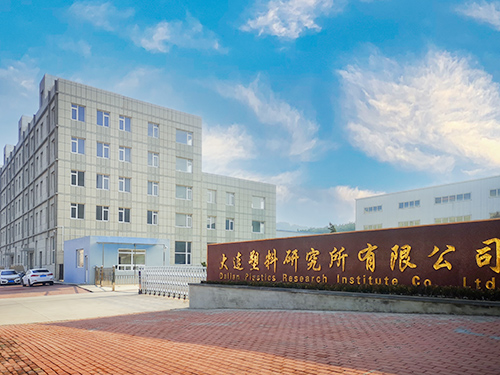
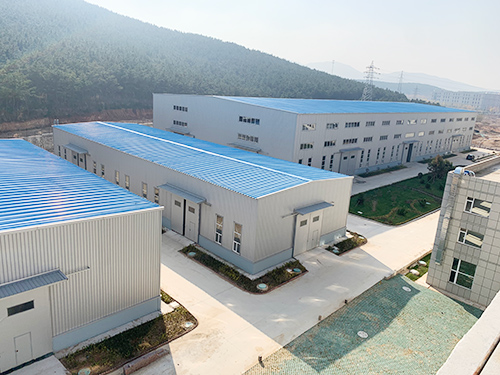
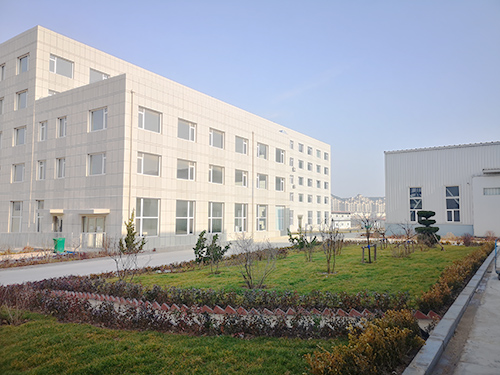




Company name: Dalian Plastics Research Institute Co., Ltd
Telephone:+86-411-66177850
18841186255
Fax:+86-411-86601784
Address: No.18 Fenghenan Road,Lvshunkou District,Dalian,Liaoning

Company name: Dalian Plastics Research Institute Co., Ltd
Telephone:+86-411-66177850
18841186255
Fax:+86-411-86601784
Address: No.18 Fenghenan Road,Lvshunkou District,Dalian,Liaoning
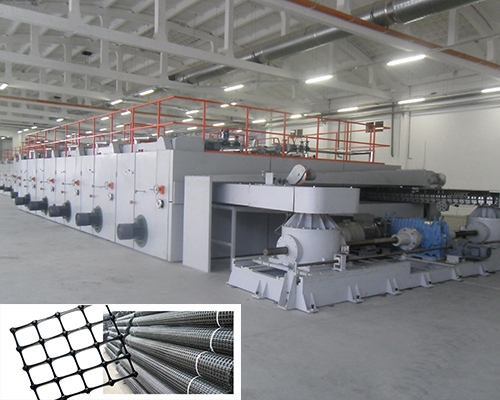
1、 Overview of Geogrid Production Line
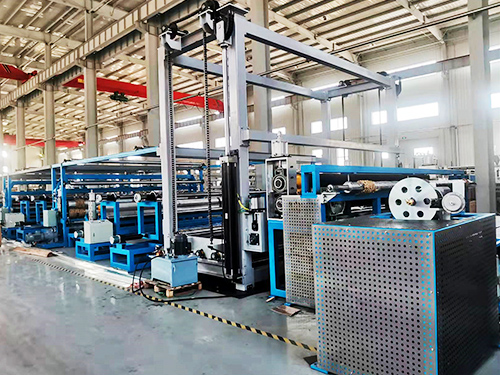
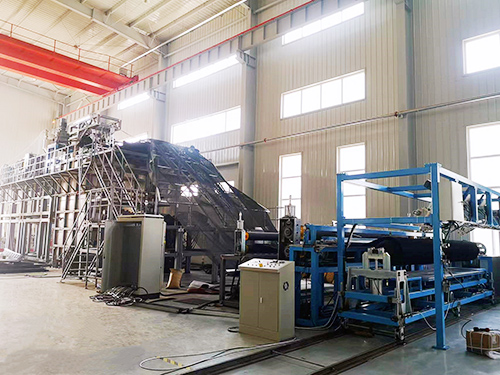
Geogrid is an important geosynthetic material widely used in engineering fields such as highways, railways, water conservancy, and construction. The geogrid production line usually includes multiple components such as raw material processing system, extrusion system, stretching system, cooling system, cutting system, coiling system, etc. In these systems, due to long-term exposure to harsh working conditions such as high-speed operation, high temperature, and high pressure, many components may experience varying degrees of wear, directly affecting production efficiency and product quality.
2、 Analysis of Main Wear prone Components
1. Wear parts of extrusion system
The extrusion system is the core part of the geogrid production line, mainly including key components such as screws, barrels, molds, etc.
(1) Screw wear
Screw is one of the easily worn components in an extruder. Wear mainly occurs at the top and root of the screw edge, manifested as a decrease in size and blunting of the screw edge. The reasons for wear and tear include:
The abrasion of metal surfaces by fillers (such as calcium carbonate, talc powder, etc.) in raw materials
Corrosion of Metal by Plastic Melt at High Temperature
High speed friction between screw and material
(2) Wear and tear of the barrel
The inner wall of the barrel and the screw work together, but also face serious wear and tear problems. The forms of wear include:
Axial wear: Uneven wear along the length of the barrel
Radial wear: Increased inner diameter leads to increased clearance with the screw
Local wear: particularly severe in the feeding and compression sections
(3) Mold wear and tear
The mold head is a key component that forms the initial shape of the grille, and its flow channel and mold lip are prone to wear:
Mold lip wear leads to uneven product thickness
Channel wear affects the uniformity of melt flow
The wear of the mesh forming area causes changes in the shape of the mesh nodes
2. Wear parts of the stretching system
The stretching system forms a grid structure by longitudinally and transversely stretching the extruded substrate, and its wear-resistant components include:
(1) Stretching roller
Surface coating wear: affecting the surface quality of the substrate
Bearing wear: causing uneven rotation of the roller
Neck wear: affecting the accuracy of tensile tension control
(2) Clamping device
Wear of clamping teeth: causing the substrate to slip or tear
Wear of cylinder piston: affecting the stability of clamping force
Rail wear: causing unstable movement of the clamping device
(3) Chain and sprocket
Wear of chain pin and sleeve: resulting in increased pitch
Wear of sprocket tooth surface: affecting transmission accuracy
Chain elongation: affects the synchronization of stretching
3. Worn parts of the transmission system
(1) Gearbox
Gear wear: pitting and peeling on the tooth surface
Bearing wear: leading to increased vibration and noise
Seal wear: Lubricating oil leakage
(2) Coupling
Wear of elastic components: causing an increase in transmission clearance
Keyway wear: affecting torque transmission efficiency
(3) Belt and pulley
Belt wear: causing slippage and decreased transmission efficiency
Belt pulley groove wear: Accelerating belt wear
4. Wear parts of heating and cooling system
(1) Heating coil
Resistance wire aging: decreased heating efficiency
Insulation layer damage: leading to short circuit risk
(2) Cooling roller
Surface coating wear: affecting cooling effect
Internal waterway scaling: reducing heat exchange efficiency
(3) Cooling fan
Blade wear: reduced airflow
Bearing wear: increased vibration
5. Wear and tear components of auxiliary systems
(1) Cutting device
Tool wear: Irregular incision
Rail wear: Decreased cutting accuracy
(2) Coiling device
Friction plate wear: unstable tension control
Wear of shaft sleeve: uneven winding
(3) Conveyor system
Conveyor belt wear: surface damage
Wear of drum bearings: inflexible rotation
3、 Analysis of factors affecting wear and tear
Material factors: The wear resistance of different materials varies significantly, for example, the lifespan of ordinary carbon steel and wear-resistant alloys may differ by several times.
Process parameters: Improper process parameters such as temperature, pressure, and speed can accelerate wear.
Maintenance: Regular lubrication, cleaning, and adjustment can significantly extend the lifespan of components.
Raw material characteristics: Raw materials with high filler content and impurities will exacerbate wear and tear.
Design factor: Reasonable structural design can reduce local stress concentration and abnormal wear.
4、 Wear prevention and maintenance measures
Selection of wear-resistant materials: Surface treatment (such as hard chromium plating, tungsten carbide spraying) or the use of wear-resistant alloys are applied to parts that are prone to wear.
Optimize process parameters: Control appropriate temperature, pressure, and speed to avoid overload operation.
Regular maintenance and upkeep:
Establish a comprehensive lubrication system
Regularly inspect the wear and tear of key components
Timely replace components that have reached the wear limit
Improved design:
Optimize the structure of easily worn parts
Add wear-resistant lining or replaceable components
Status monitoring:
Vibration Monitoring
temperature monitoring
Regular dimension measurement
The wear and tear of geogrid production line equipment directly affects product quality and production efficiency. By understanding the characteristics and wear mechanisms of vulnerable components in various systems, targeted preventive and maintenance measures can be taken to significantly extend the service life of equipment and reduce production costs. Enterprises should establish a comprehensive equipment maintenance system and develop scientific maintenance plans based on actual situations to ensure stable and efficient operation of production lines.



Address: No.18 Fenghenan Road,Lvshunkou District,Dalian,Liaoning Telephone:18841186255 mailbox:dsy@plasticdl.com

 Taobao Wangwang