
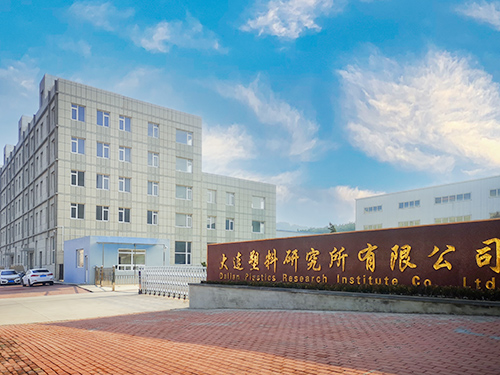




Company name: Dalian Plastics Research Institute Co., Ltd
Telephone:+86-411-66177850
18841186255
Fax:+86-411-86601784
Address: No.18 Fenghenan Road,Lvshunkou District,Dalian,Liaoning
Company name: Dalian Plastics Research Institute Co., Ltd
Telephone:+86-411-66177850
18841186255
Fax:+86-411-86601784
Address: No.18 Fenghenan Road,Lvshunkou District,Dalian,Liaoning
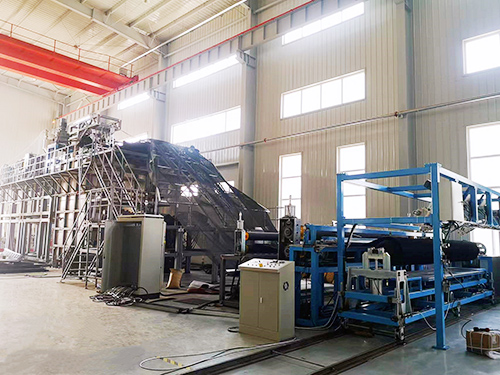
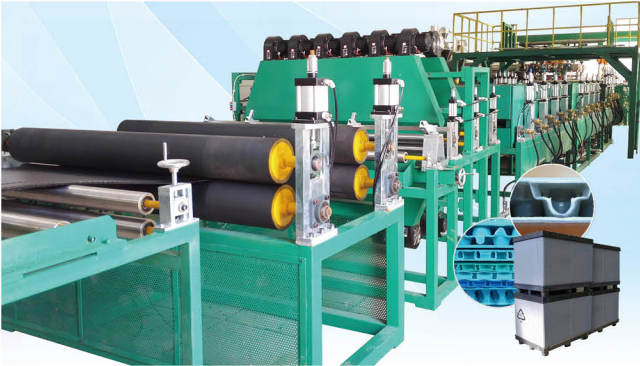
The modular design of honeycomb panel production line equipment is a design method that decomposes complex systems into multiple independent and interchangeable modules, which are combined through standardized interfaces. This design approach can improve production efficiency, reduce maintenance costs, enhance equipment flexibility and scalability. The following are the specific methods and steps for implementing modular design of honeycomb panel production line equipment.
1、 Basic principles of modular design
functional independence
Each module should have clear functions and be able to independently complete specific tasks. For example, the honeycomb panel production line can be divided into raw material processing module, forming module, curing module, cutting module, etc.
Standardizes interfaces
The connection interfaces between modules need to be standardized to ensure seamless integration of different modules and facilitate replacement and upgrading.
interchangeability
Modules should have universality and be able to be interchanged and used in different production lines or equipment, reducing repetitive design and manufacturing costs.
Flexibility and Scalability
Modular design should support flexible configuration and expansion of equipment to adapt to different production needs and process changes.
2、 Module division of honeycomb panel production line equipment
According to the production process of honeycomb panels, the production line equipment can be divided into the following main modules:
Raw material processing module
Responsible for the storage, transportation, and pre-processing of raw materials. For example, the quantitative supply and mixing of raw materials such as paper and glue.
Forming module
The processed raw materials are formed into honeycomb structures through specific processes such as hot pressing and cold pressing. This module needs to have high-precision molding capability.
Curing module
Cure the formed honeycomb board to ensure its strength and stability. The curing method can be thermal curing, chemical curing, or natural curing.
Cutting module
Cut the cured honeycomb board according to the required size. This module requires high-precision cutting equipment and an automated size control system.
Surface treatment module
Coating, laminating or other treatments are applied to the surface of honeycomb panels to meet the needs of different application scenarios.
Testing and packaging module
Conduct quality inspection on finished products, and complete packaging and storage. This module can integrate automatic detection equipment and intelligent packaging systems.
3、 Specific implementation method of modular design
Independent design of functional modules
The design of each module should revolve around its core functionality and minimize coupling with other modules. For example, the molding module can be independently designed as a complete unit that includes pressure control, temperature regulation, and molding molds.
Design of standardized interfaces
The connection interfaces between modules need to be standardized, including mechanical interfaces, electrical interfaces, and data interfaces. For example, using a unified bolt connection method and standardized electrical plugs.
Rapid replacement and upgrade of modules
When designing, the convenience of module installation and disassembly should be considered. For example, using quick locking devices or modular rail systems for easy replacement and upgrading.
Integration of intelligence and automation
Integrate sensors, controllers, and communication interfaces in each module to achieve intelligent collaboration and automated control between modules. For example, data interaction between modules is realized through PLC or industrial Internet technology.
Module testing and validation
Each module should undergo independent testing before being put into use to ensure that its functionality and performance meet the requirements. Meanwhile, the collaborative work between modules also requires overall validation.
4、 The advantages of modular design
Increase productivity
Modular design can reduce equipment debugging and installation time, while facilitating parallel production and assembly.
Reduce maintenance costs
When a module malfunctions, it can be quickly replaced to reduce downtime. Meanwhile, the standardized design of modules also reduces spare parts inventory and maintenance costs.
Enhance the flexibility of equipment
Modular design supports rapid restructuring and expansion of devices to meet the production needs of different products.
Promote technological innovation
Modular design facilitates the optimization and upgrading of individual modules, driving technological progress for the entire device.
5、 Challenges and Solutions of Modular Design
Collaboration issues between modules
There may be issues with performance matching and collaborative work between different modules. The solution is to achieve seamless connection between modules through a unified control system and data interface.
The initial design cost is relatively high
Modular design requires more time and resources to be invested in pre planning and development. The solution is to share costs through long-term use and large-scale production.
Balancing universality and specificity of modules
Modules need to balance universality and specificity, allowing for interchangeable use across different devices while meeting specific process requirements. The solution is to combine standardization and customization of modules.
The modular design of honeycomb panel production line equipment achieves high efficiency, flexibility, and scalability by decomposing complex systems into independent functional modules. This design method not only improves production efficiency and maintenance convenience, but also provides a good foundation for technological innovation and upgrading of equipment. In practical applications, it is necessary to combine specific production needs and technical conditions, reasonably divide modules, design interfaces, and solve collaboration and cost issues to achieve the maximum value of modular design.



Address: No.18 Fenghenan Road,Lvshunkou District,Dalian,Liaoning Telephone:18841186255 mailbox:dsy@plasticdl.com

 Taobao Wangwang