
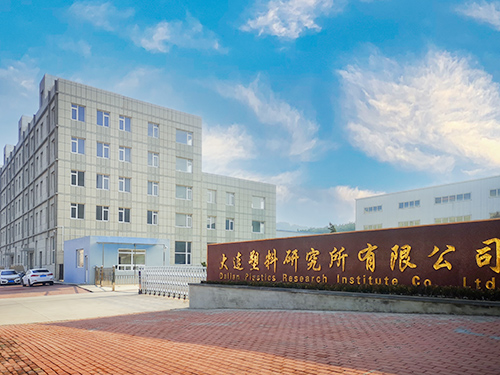
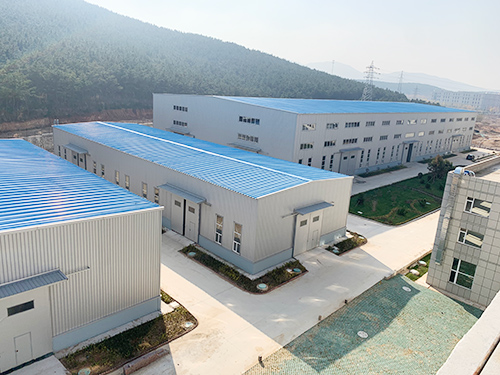
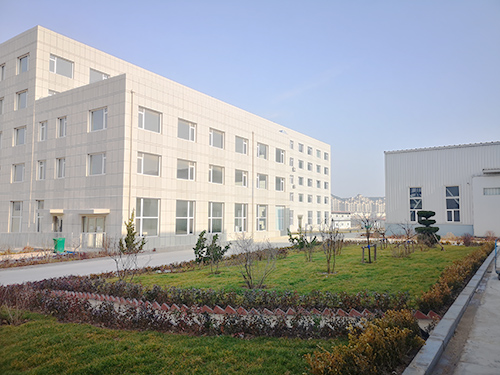




Company name: Dalian Plastics Research Institute Co., Ltd
Telephone:+86-411-66177850
18841186255
Fax:+86-411-86601784
Address: No.18 Fenghenan Road,Lvshunkou District,Dalian,Liaoning

Company name: Dalian Plastics Research Institute Co., Ltd
Telephone:+86-411-66177850
18841186255
Fax:+86-411-86601784
Address: No.18 Fenghenan Road,Lvshunkou District,Dalian,Liaoning
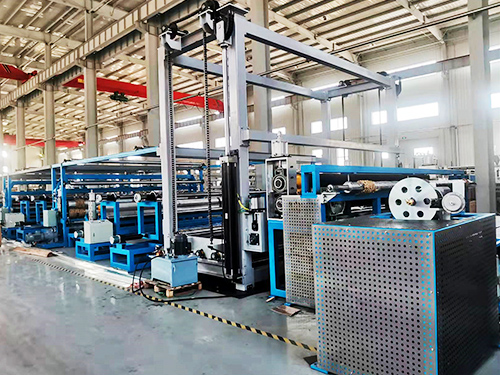
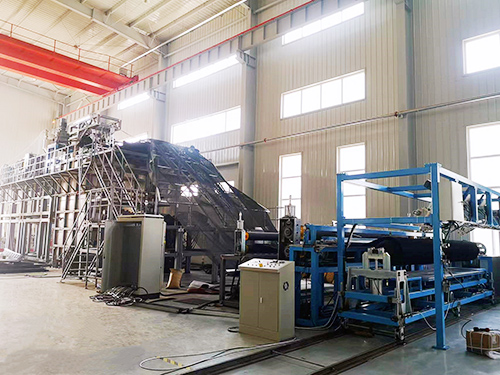
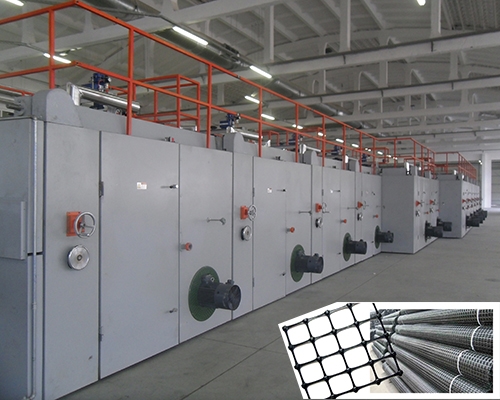
Bidirectional stretch net production line equipment is a specialized device used for producing plastic stretch nets, widely used in agriculture, construction, packaging, horticulture and other fields. This type of production line processes plastic raw materials into mesh products with specific mesh structures through both vertical and horizontal stretching processes. Understanding the performance indicators of a biaxially stretched mesh production line is of great significance for equipment selection, process optimization, and product quality control.
1、 Main performance indicators
(1) Production capacity indicators
Maximum production speed: usually expressed in meters per minute (m/min), reflecting the length of mesh material that the equipment can produce per unit time. High end equipment can reach 100-150m/min.
Production: Expressed in kilograms per hour (kg/h) or tons per day (t/d), depending on factors such as raw material density, mesh size, and stretching ratio.
Working width: refers to the maximum width of the mesh material that the equipment can produce, with common specifications including 1m, 1.5m, 2m, 2.5m, 3m, etc.
Thickness range: The thickness range of mesh materials that the equipment can produce is usually 0.1-3.0mm, and different specifications of products require different process parameters.
(2) Mechanical performance indicators
Stretching ratio:
Longitudinal (MD) stretch ratio: usually 2-8 times
Horizontal (TD) stretch ratio: usually 3-10 times
The biaxial stretching ratio (the ratio of longitudinal to transverse stretching ratios) affects the mechanical anisotropy of mesh materials
Tensile force control accuracy: High end equipment can achieve within ± 1%, ensuring stability and product consistency during the stretching process.
Temperature control accuracy: The temperature control accuracy of the preheating zone, stretching zone, and shaping zone is usually required to be ± 1 ℃.
Speed synchronization accuracy: The speed synchronization accuracy between each transmission roller affects the uniformity of the product, and high-end equipment can reach ± 0.1%.
(3) Energy consumption indicators
Unit energy consumption: expressed in kWh/kg, reflecting the amount of electricity consumed to produce a unit weight product.
Thermal energy utilization rate: The thermal efficiency of the heating system can reach over 85% with excellent equipment.
Cooling efficiency: The heat transfer efficiency of the cooling system affects production speed and product performance.
(4) Degree of automation
Control system: PLC or DCS control level, including parameter setting, storage, and calling functions.
Online detection: configuration of automated detection systems such as thickness detection, width detection, and defect detection.
Automatic roll change: the presence or absence of a fully automatic roll change system and the roll change time.
Data collection: Ability to automatically record and analyze production data.
(5) Product quality indicators
Mesh uniformity: Mesh size deviation, usually within ± 5%.
Thickness uniformity: Thickness deviation, high-end products require within ± 3%.
Mechanical properties:
Tensile strength (MD/TD)
Elongation at break
tear strength
Nodule strength (for knotted nets)
Dimensional stability: thermal shrinkage rate, creep performance, etc.
Appearance quality: surface smoothness, no defects, no pollution, etc.
(6) Reliability index
Equipment utilization rate: It is usually required to reach over 90%.
Mean Time Between Failures (MTBF): Reflecting equipment reliability, high-end equipment can reach over 5000 hours.
Mean Time to Repair (MTTR): Reflects the convenience of equipment maintenance, usually controlled within 4 hours.
Life of key components: the design life of key components such as screws, barrels, molds, and stretching rollers.
(7) Adaptability indicators
Raw material adaptability: the types of raw materials that can be processed (PP, PE, PET, etc.) and the convenience of switching.
Product specification switching time: The time required to switch between products of different specifications.
Environmental adaptability: The equipment's requirements for the factory environment (temperature, humidity, cleanliness).
3、 The interrelationship between performance indicators
There are complex interrelationships between the performance indicators of the biaxially stretched mesh production line:
The production speed and product quality are usually inversely related, and an increase in speed may lead to a decrease in quality.
An increase in stretching ratio will improve product strength but reduce elongation at break.
The precision of temperature control directly affects the uniformity of product thickness and the consistency of mechanical properties.
An increase in automation can improve product quality stability, but it will also increase equipment investment costs.
4、 Basis for selecting performance indicators
When choosing a biaxially oriented mesh production line, the key performance indicators should be determined based on the following factors:
Product use: Different application fields have different requirements for the performance of mesh materials.
Raw material characteristics: Different resin raw materials require different processing parameters.
Production scale: Large scale production pays more attention to efficiency and stability, while small batch and multi variety production pays more attention to flexibility.
Investment budget: High end performance usually means higher equipment costs.
Energy consumption requirements: In areas with high energy prices, energy consumption indicators are more important.
The performance indicators of a biaxially stretched mesh production line are important criteria for measuring equipment technology level, production capacity, and product quality. When selecting equipment, users should consider various performance indicators comprehensively and choose equipment configurations with better cost-effectiveness based on their own product characteristics and market demand. At the same time, equipment manufacturers should continuously optimize their designs and improve key performance indicators to meet the growing demand for high-quality stretch mesh products in the market.



Address: No.18 Fenghenan Road,Lvshunkou District,Dalian,Liaoning Telephone:18841186255 mailbox:dsy@plasticdl.com

 Taobao Wangwang