
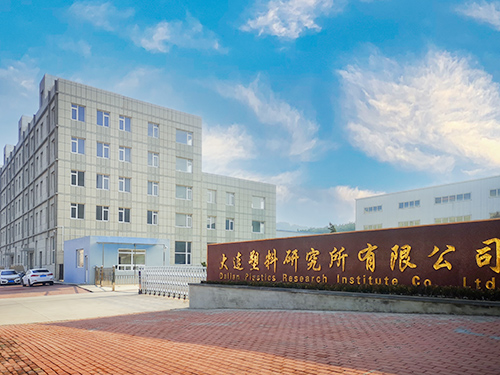
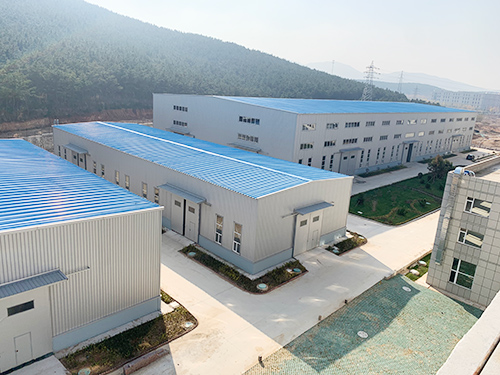
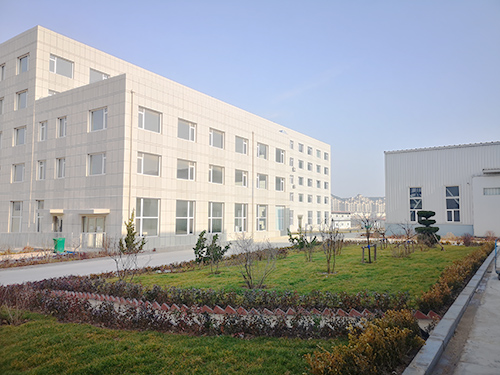




Company name: Dalian Plastics Research Institute Co., Ltd
Telephone:+86-411-66177850
18841186255
Fax:+86-411-86601784
Address: No.18 Fenghenan Road,Lvshunkou District,Dalian,Liaoning

Company name: Dalian Plastics Research Institute Co., Ltd
Telephone:+86-411-66177850
18841186255
Fax:+86-411-86601784
Address: No.18 Fenghenan Road,Lvshunkou District,Dalian,Liaoning
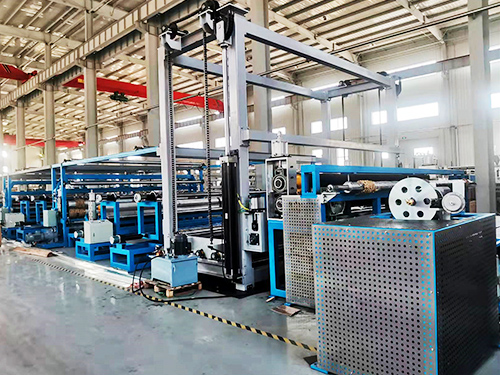
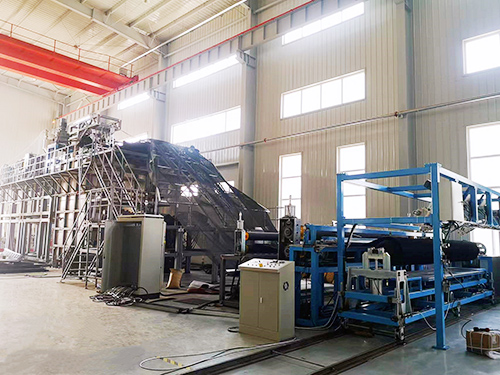
Geogrid is a widely used reinforcing material in civil engineering, mainly used to reinforce soil, prevent soil erosion, and enhance roadbed stability. The geogrid production line equipment is the key to achieving industrial production, and its working principle involves multiple links, including raw material processing, extrusion molding, stretching and shaping, cooling, cutting, and coiling. The following will elaborate on the working principle of the geogrid production line equipment.
1. Raw material processing
The main raw materials for geogrids are high molecular weight polymers such as polypropylene (PP), polyethylene (PE), or polyester (PET). In the production process, these raw materials need to be processed first. Raw materials usually exist in the form of particles or powders, and are first fed into a hopper through an automatic feeding system. The raw materials in the hopper are dried to remove moisture and ensure the stability of the materials during subsequent processing.
2. Extrusion molding
The dried raw materials are melted and extruded through a screw extruder. The screw extruder is one of the core equipment in the geogrid production line. Its working principle is to heat and melt solid particles or powders into a viscous melt through the rotation of the screw. Screw extruders are usually divided into multiple heating zones, with each heating zone gradually increasing in temperature to ensure uniform melting of the material. The melted polymer material is extruded through a mold to form a continuous sheet or mesh structure.
3. Stretching and shaping
The extruded sheet or mesh structure needs to be stretched and shaped to enhance its mechanical properties. Stretching and shaping are achieved through a biaxial stretching machine, which is divided into two parts: longitudinal stretching and transverse stretching. The sheet or mesh structure is longitudinally stretched by a longitudinal stretching machine, and then transversely stretched in a transverse stretching machine. During the stretching process, the material is stretched at high temperatures, and the molecular chains are oriented along the stretching direction, thereby improving the strength and stiffness of the material. The geogrid after stretching and shaping has high tensile strength and low elongation.
4. Cooling
The geogrid after stretching and shaping needs to undergo cooling treatment to stabilize its structure. Cooling is usually achieved through cooling rollers or cooling bellows. Cooling roller is a metal roller with a cooling water circulation system. When the geogrid passes through the cooling roller, the heat is quickly carried away, the material temperature decreases, and the structure is fixed. The cooling air box cools the material by blowing cold air. The cooled geogrid has good dimensional stability and mechanical properties.
5. Cutting
The cooled geogrid needs to be cut according to customer requirements. Cutting equipment usually uses automatic cutting machines, which precisely cut geogrids according to preset lengths and widths. During the cutting process, the cutting blade or laser cutting head cuts along a predetermined path to ensure that the cutting edge is flat and free of burrs. The cut geogrid can be further processed as needed, such as punching, stamping, etc.
6. Roll up
The cut geogrid is coiled by a coiler to form a rolled product. The working principle of the winding machine is to drive the winding shaft to rotate by a motor, and evenly wind the geogrid on the winding shaft. During the coiling process, the coiling tension needs to be kept constant to ensure the compactness and uniformity of the coil material. The rolled geogrid can be packaged by a packaging machine for easy transportation and storage.
7. Quality inspection
Quality inspection is an important step in ensuring the performance of geogrids throughout the entire production process. Quality inspection includes testing of various processes such as raw materials, extrusion molding, stretching and shaping, cooling, cutting, and coiling. Common testing methods include tensile testing, tear testing, weather resistance testing, etc. Through quality inspection, problems in the production process can be identified and resolved in a timely manner, ensuring that the quality of geogrids meets standard requirements.
8. Automatic control system
Modern geogrid production lines are usually equipped with automatic control systems to achieve automated control of the production process. The automatic control system monitors and adjusts real-time parameters such as temperature, pressure, and speed during the production process through sensors, PLC (programmable logic controller), and human-machine interface (HMI) devices. The automatic control system not only improves production efficiency, but also ensures the stability and consistency of product quality.
The working principle of geogrid production line equipment involves multiple stages, including raw material processing, extrusion molding, stretching and shaping, cooling, cutting, and coiling. Each step requires precise control and coordination to ensure the quality and performance of the geogrid. Through the application of automatic control systems, modern geogrid production lines have achieved efficient, stable, and automated production, meeting the demand for high-strength and high durability geotechnical materials in civil engineering.



Address: No.18 Fenghenan Road,Lvshunkou District,Dalian,Liaoning Telephone:18841186255 mailbox:dsy@plasticdl.com

 Taobao Wangwang